Newcastle is home to one of the southern hemisphere’s largest renewable energy and grid integration testing facilities, where researchers and businesses can put emerging energy technologies through their paces before they are used on electricity networks.
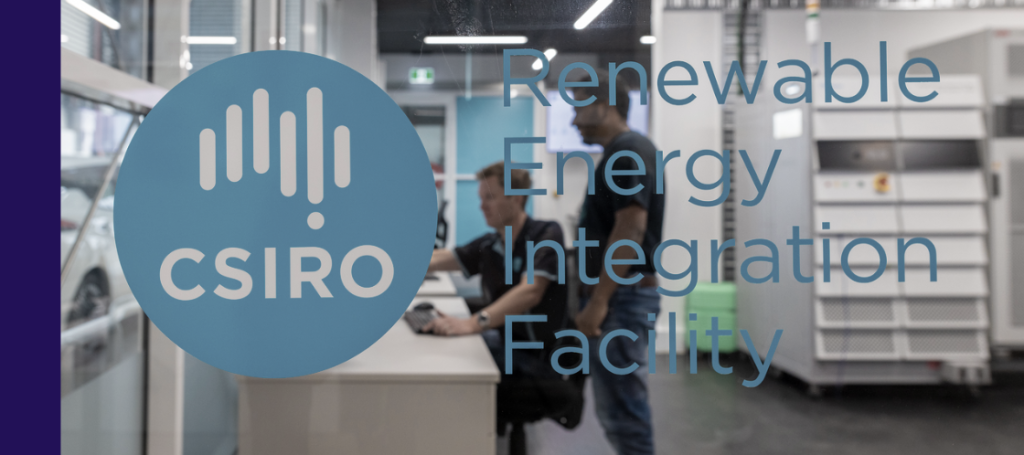
Established in 2009, CSIRO’s Renewable Energy Integration Facility (REIF) provides a controlled environment for testing solar panels, batteries, electric vehicle chargers, smart inverters and other technologies that need to work together as more renewable energy enters Australia’s electricity system.
The facility is part of CSIRO’s Newcastle Energy Centre, which also supports research into energy storage, solar photovoltaics and concentrated solar thermal technologies.
In February 2026, CSIRO officially launched a $3 million upgrade to the REIF that more than doubled its power testing capacity.
Funded through the Australian Government’s Trailblazer Universities Program, the upgrade included new equipment capable of recreating electricity network conditions, allowing researchers to test how energy technologies respond to changes in supply, faults and other disturbances.
The work helps researchers and technology developers understand how equipment will perform outside the laboratory, where electricity networks must accommodate everything from household rooftop solar to large-scale renewable generation.
Can electric vehicles help power our homes?
One of the projects tested at the Newcastle facility explores how electric vehicles could become another source of electricity for homes and the grid.
CSIRO has been working with electricity distributor Essential Energy to investigate vehicle-to-grid technology, which allows compatible electric vehicles to both charge from the electricity network and return stored electricity when needed.
The research involved testing at Essential Energy’s facilities in Port Macquarie and CSIRO’s Newcastle laboratory, where researchers recreated household electricity conditions to investigate how an electric vehicle could store rooftop solar energy, supply a home and export electricity to the grid.
Using an AUSEV Ford F-150 Lightning and a Sigenergy charger, the team demonstrated bidirectional charging with commercially available equipment using the CCS2 charging standard.
The project received the 2025 Energy Networks Australia Industry Innovation Award.
CSIRO says the research will continue until 2029, examining how vehicle-to-grid systems can be integrated into electricity networks and used more widely.
Working with Google’s X on smarter solar technology
Another collaboration has brought together CSIRO researchers and Tapestry, a team within Alphabet’s innovation laboratory, X.
Their work focuses on smart inverters, the equipment that allows electricity generated by solar panels and stored in batteries to be used by homes and businesses or supplied to the grid.
As more households install solar and batteries, electricity networks need to manage power flowing in multiple directions rather than simply delivering it from large generators to consumers.
Advanced inverters can help manage these changes by responding to variations in voltage, frequency and other network conditions.
CSIRO and Tapestry have been developing and testing inverter technology designed to respond more effectively to these conditions.
In June 2024, CSIRO reported that prototypes had been tested at its Newcastle Energy Centre, with early results demonstrating improvements in inverter response and the transfer of computer simulations to physical equipment.
The research could help electricity distributors and virtual power plant operators manage networks with growing numbers of rooftop solar systems, home batteries and electric vehicles.
Research that helped establish Evergen
The Newcastle facility has also played a role in research that has led to commercial energy technologies.
CSIRO’s work on virtual power stations provides one example.
Virtual power stations connect and coordinate distributed energy resources, such as household solar panels and batteries, allowing them to operate together rather than as individual systems.
CSIRO’s research program included a proof-of-concept project with Lake Macquarie City Council in 2012, followed by a collaboration with Lendlease in 2015.
Technology developed through the program was tested at the Newcastle facility before being used in a residential pilot involving approximately 50 to 100 sites.
The research examined how coordinating rooftop solar and energy storage could improve electricity network performance and allow networks to accommodate more renewable generation.
CSIRO identifies the establishment of energy technology company Evergen in 2015 among the commercial outcomes of its virtual power station research.
Other outcomes included licensing technology to Netherlands-based Upp Energy and contributing to Australian Standards.
These projects are earlier examples of how research undertaken in Newcastle has contributed to technologies used and developed beyond the laboratory.
Newcastle research reaching industry
The wider Newcastle Energy Centre has also produced technologies that are being developed for commercial use.
One example is FPR Energy, a Newcastle-based company established in 2024 to commercialise concentrated solar thermal technology developed by CSIRO.
Co-founded by CSIRO, RFC Ambrian and Osaka Gas, the company secured $15 million in seed funding to develop technology that uses concentrated sunlight to heat ceramic particles to temperatures of up to 1,200°C.
The heated particles can store energy for industrial processes that require very high temperatures, including steelmaking, cement production and minerals processing.
FPR Energy grew out of CSIRO’s concentrated solar thermal research, which is separate from the Renewable Energy Integration Facility but also based at the Newcastle Energy Centre.
The company’s development is another example of how energy research undertaken in Newcastle can progress towards commercial applications.
A testing facility available to industry
CSIRO’s Renewable Energy Integration Facility is not limited to its own research programs.
The facility is available to external businesses and research organisations seeking to develop, test and commercialise energy technologies.
Following its upgrade, researchers can simulate household and commercial electricity systems, microgrids and grid disturbances, as well as investigate how batteries, solar generation and electric vehicles interact.
It also has more than 15 electric vehicle charging stations from Australian and international suppliers, providing equipment for testing charging systems and related technologies.
CSIRO Energy Systems Research Program Director Dr John Ward said the facility allows researchers to examine how energy technologies behave under realistic electricity network conditions.
“The Renewable Energy Integration Facility allows us to simulate and stress-test real-world grid conditions, giving us deeper insight into how inverter-based technologies like solar and batteries perform as their share grows across the electricity system,” Dr Ward said.
CSIRO Chief Executive Dr Doug Hilton said the facility also gives industry access to independent testing capabilities.
“The Renewable Energy Integration Facility provides industry, researchers and system operators with an independent laboratory to test how technologies such as wind, solar, batteries and electric vehicles can integrate safely and reliably into the grid,” Dr Hilton said.
CSIRO is inviting expressions of interest from businesses and research organisations interested in using the facility for technology development, testing and commercialisation.
Businesses can contact EnergyEOI@csiro.au to discuss potential collaborations.
Eligible Australian startups and small to medium enterprises can also investigate the CSIRO Kick-Start Program, which provides $20,000 to $60,000 in matched funding for research and development projects undertaken with CSIRO.
The funding program has separate eligibility requirements and is not automatically linked to use of the Newcastle facility.
The facility also offers dedicated access for projects associated with the Trailblazer for Recycling and Clean Energy (TRaCE) through the Australian Government’s Trailblazer Universities Program.