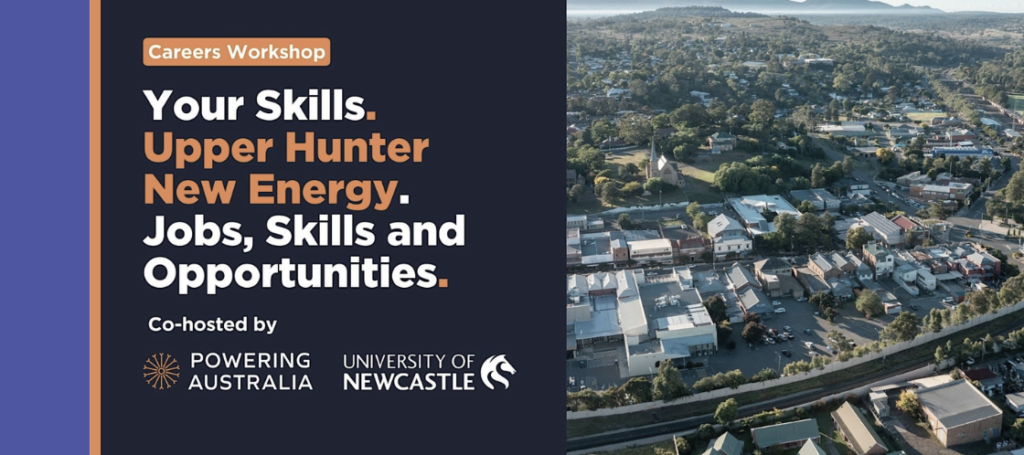
Workers in mining, power generation, manufacturing, engineering and related industries are invited to explore how their existing skills could transfer into emerging energy industries at a free information session at the University of Newcastle’s Muswellbrook location on Monday 30 November.
Co-hosted by Powering Australia and the University of Newcastle, the event, Your Skills. Upper Hunter New Energy. Jobs, Skills and Opportunities will examine employment opportunities, employer requirements, training pathways and support available to workers considering a career change.
The event will run from 5.30 pm to 8 pm and include a moderated panel discussion and audience questions. Dinner and refreshments will be provided.
Representatives from Powering Australia, the University of Newcastle, EnergyCo, industry, TAFE NSW, workforce and transition organisations, and the Hunter Jobs Alliance will contribute to discussions about the region’s changing employment landscape.
The session will focus on practical examples of transferable skills, including those held by electricians, fitters, boilermakers, machinery operators and technicians, and identify where additional qualifications or training may be required.
Connecting industry skills with emerging opportunities
Powering Australia is a federally funded Industry Growth Centre established in 2024 to develop Australia’s clean technology manufacturing capability.
The organisation connects businesses, researchers and investors to support the commercialisation of Australian technologies, workforce development and domestic manufacturing across energy, transport, electricity networks and industrial decarbonisation.
Its responsibilities include delivering the Australian Government’s Building Future Battery Capabilities Program, which supports battery technology commercialisation and workforce training.
The program includes a $10 million Battery Workforce Skills and Training stream, designed to address skills shortages, develop nationally relevant training and improve battery safety. It also aims to increase awareness of career opportunities for workers moving from emissions-intensive industries into battery-related employment.
The University of Newcastle is co-hosting the event, bringing its education, research and industry engagement experience to discussions about workforce development and the region’s energy transition.
EnergyCo, the NSW Government agency responsible for delivering Renewable Energy Zones and associated electricity infrastructure, will provide a perspective on the development of renewable energy and transmission projects and their workforce requirements.
TAFE NSW will contribute to discussions about vocational education and training pathways, including opportunities for workers to build on existing trade and technical qualifications.
Industry representatives and workforce and transition organisations will also participate, providing perspectives on employer requirements, employment pathways and assistance available to workers.
Hunter Jobs Alliance advocates for secure local employment
Also participating in the event is the Hunter Jobs Alliance, a coalition of trade unions, community and environmental organisations established in 2020 to advocate for secure employment and economic opportunities as the region’s energy industries change.
Its affiliated organisations include the Australian Manufacturing Workers’ Union, Electrical Trades Union, United Workers Union, Community and Public Sector Union, Hunter Community Environment Centre, Lock the Gate Alliance and Nature Conservation Council of NSW, alongside other unions and community organisations.
The alliance campaigns for investment in renewable energy, manufacturing and associated supply chains, with an emphasis on maintaining secure, well-paid employment in the Hunter.
It has also advocated for coordinated regional transition planning, public investment in emerging industries and direct involvement by workers and communities in decisions affecting their economic future.
Its work has included proposals for a Hunter Valley Authority to coordinate economic diversification, attract investment and provide support for workers affected by changes in the coal industry.
New audit identifies Hunter workforce capabilities
The event follows the release of the NSW Government’s first statewide coal workforce skills audit on 5 November 2026.
The audit provides information about the occupations, qualifications, incomes and demographic characteristics of workers across NSW’s four coal-producing regions.
It found that more than 60 per cent of the state’s coal workforce is based in the Hunter, reinforcing the importance of the region in future workforce and industry planning.
Across the NSW coal workforce, approximately 46 per cent of employees are machinery operators and drivers, while around 30 per cent are technicians and trades workers. More than half hold certificate-level qualifications, and approximately 40 per cent are aged 45 or older.
The findings will inform the work of the NSW Government’s Future Jobs and Investment Authority, which has been established to support economic diversification and employment opportunities in coal-producing regions.
The audit also provides a basis for examining how existing mining industry skills could be applied in other sectors, including renewable energy infrastructure, manufacturing and industrial operations.
Renewable energy projects forecast to create Hunter jobs
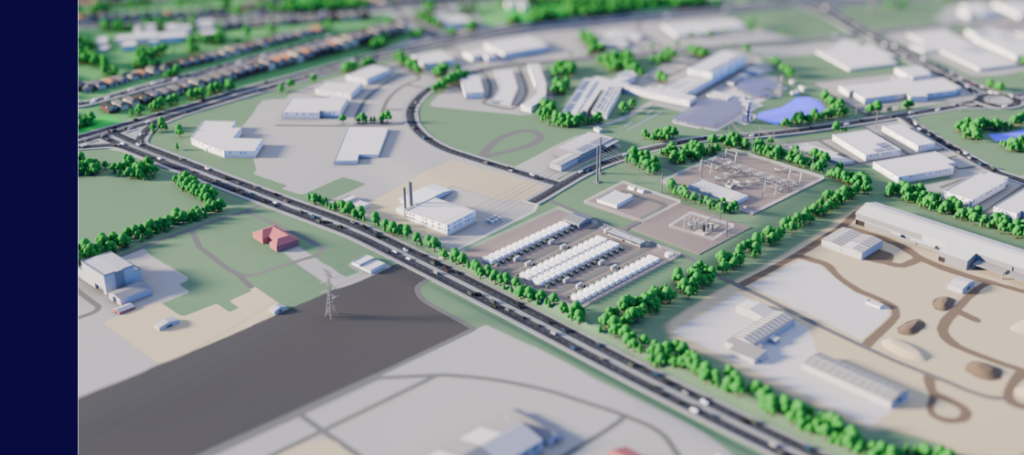
Renewable energy and transmission developments are expected to generate demand for construction, engineering, electrical, technical and operational workers across the Hunter.
EnergyCo forecasts that the Hunter–Central Coast Renewable Energy Zone and Hunter Transmission Project will together support an average of approximately 760 direct jobs per year during construction, followed by around 360 ongoing operational jobs from 2030.
The Hunter–Central Coast Renewable Energy Zone alone is expected to attract up to $3.9 billion in private investment and support an average of approximately 590 direct jobs annually during construction, with 220 ongoing operational jobs from 2030.
These forecasts cover particular electricity infrastructure developments rather than the full range of employment that could emerge across the Hunter’s energy transition.
Other developments in renewable energy generation, battery storage, manufacturing and industrial decarbonisation may create additional workforce demand, depending on project approvals, investment decisions and construction schedules.
The Muswellbrook event will give workers an opportunity to ask how their existing experience could apply to these industries, what employers are seeking and which training pathways could help them access future roles.
Event details
Your Skills. Upper Hunter New Energy. Jobs, Skills and Opportunities
Monday 30 November 2026, 5.30 pm–8 pm
University of Newcastle, Muswellbrook
Free attendance, with dinner and refreshments provided.