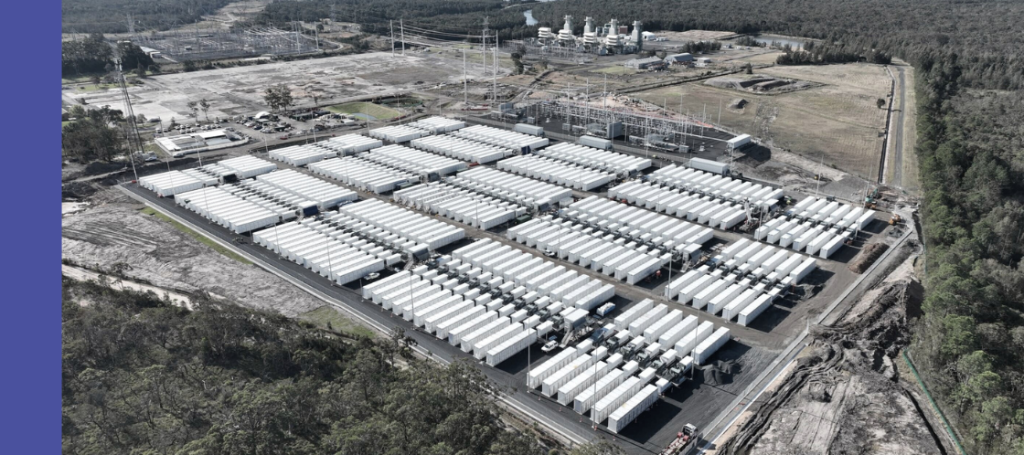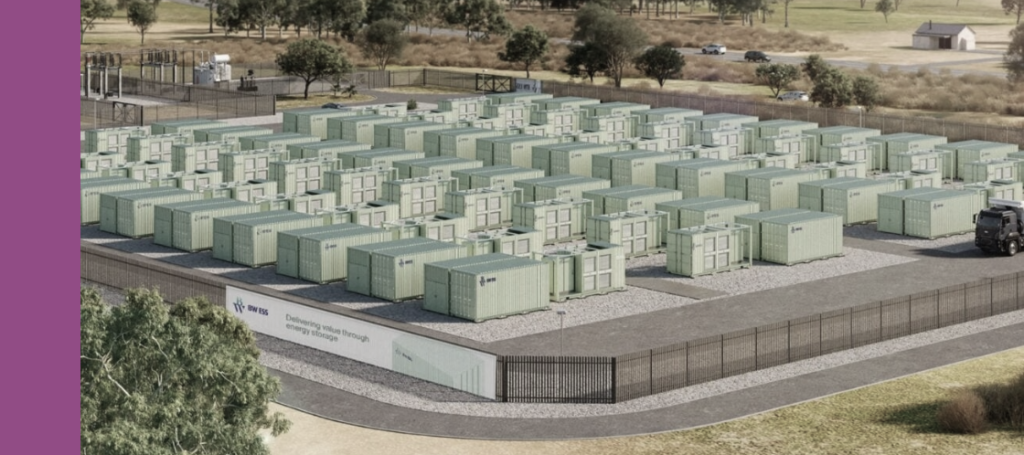
Two large battery projects capable of providing a combined 800 MW of power are progressing through the NSW planning system in the Upper Hunter.
Environmental Impact Statements are currently on public exhibition for the McCullys Gap Battery Energy Storage System near Muswellbrook and the Upper Hunter Battery Energy Storage System at Aberdeen.
While both are proposed as 400 MW projects, their storage capacities differ considerably.
McCullys Gap is proposed as a four-hour battery with 1,600 MWh of storage, while the current planning application for the Aberdeen project specifies 920 MWh.
Together, the two proposals would provide 2,520 MWh of storage if approved and constructed.
Both projects are State Significant Developments and are also controlled actions under the Commonwealth Environment Protection and Biodiversity Conservation Act.
Four-hour battery proposed beside Muswellbrook substation
The larger of the two by storage capacity is the McCullys Gap BESS, proposed for land off Sandy Creek Road, about eight kilometres north-east of Muswellbrook.
The project is being delivered by BW ESS, an energy storage developer, owner and operator headquartered in Zurich with operations in Australia and Europe.
The proposed 400 MW / 1,600 MWh system would occupy about 9.4 hectares and operate for at least 30 years.
Its location puts it immediately beside Transgrid’s existing Muswellbrook substation.
The battery would have its own project substation and connect to the existing Muswellbrook 330 kV substation through an approximately 800-metre transmission line.
Project infrastructure would include battery units, inverters, transformers, switchgear and safety systems.
BW ESS expects construction to create up to 150 jobs, with the facility operating remotely once commissioned and workers attending the site for routine maintenance.
Construction is currently proposed to begin in 2027, subject to the project receiving approval.
The NSW Planning Portal lists the McCullys Gap application as being on exhibition until 13 October.
Aberdeen project targets existing transmission corridor
About 20 kilometres further north, North Harbour Clean Energy is proposing the Upper Hunter BESS on land off Campbell Street at Aberdeen.
The project was originally developed by Maizewood Pty Ltd, which was acquired by North Harbour Clean Energy in July 2024. North Harbour now owns and manages the project.
Its current State Significant Development application proposes a 400 MW / 920 MWh battery and associated connection infrastructure.
The battery would use lithium-ion technology and charge from the electricity grid before discharging electricity back into the network when required.
The site was selected in part because of its proximity to existing 330 kV Transgrid infrastructure, allowing the project to connect without a long new transmission route.
North Harbour has estimated completion in 2029, although the project remains in the planning phase and detailed design and construction arrangements would follow approval.
The Aberdeen application is on public exhibition until 9 October.
Storage projects cluster around existing grid infrastructure
The two proposals would add to a growing concentration of large-scale storage projects around the Upper Hunter’s existing electricity infrastructure.
Rather than generating electricity themselves, both batteries would draw electricity from the grid, store it and return it when required.
Their proposed locations illustrate the value developers are placing on access to existing high-voltage infrastructure as new storage projects are planned in the region.
McCullys Gap sits beside the Muswellbrook substation, while the Aberdeen project is close to an existing Transgrid 330 kV transmission line.
Both are also located within the Hunter-Central Coast Renewable Energy Zone.
Neither project has yet received development consent. Following exhibition, submissions will be considered as part of the NSW assessment process before a determination is made.