Two major rail programs are moving into procurement, bringing new manufacturing, technology and supply-chain opportunities to the Hunter.
The High Speed Rail Authority has opened an Expression of Interest for an Advanced Manufacturing Facility to support development of the Newcastle to Sydney high-speed railway.
At the same time, Transport for NSW is seeking manufacturers for the first fleet under the NSW Government’s $12 billion Future Fleet Program, which will establish a state-owned train production facility in the Hunter.
The Net Zero Economy Authority has also drawn attention to the high-speed rail opportunity, saying the proposed manufacturing facility is expected to create opportunities for workers, businesses and communities as the Hunter economy continues to evolve through the energy transition.
High-speed rail seeks advanced manufacturing capability
The High Speed Rail Authority opened its Advanced Manufacturing Facility EOI on 23 September.
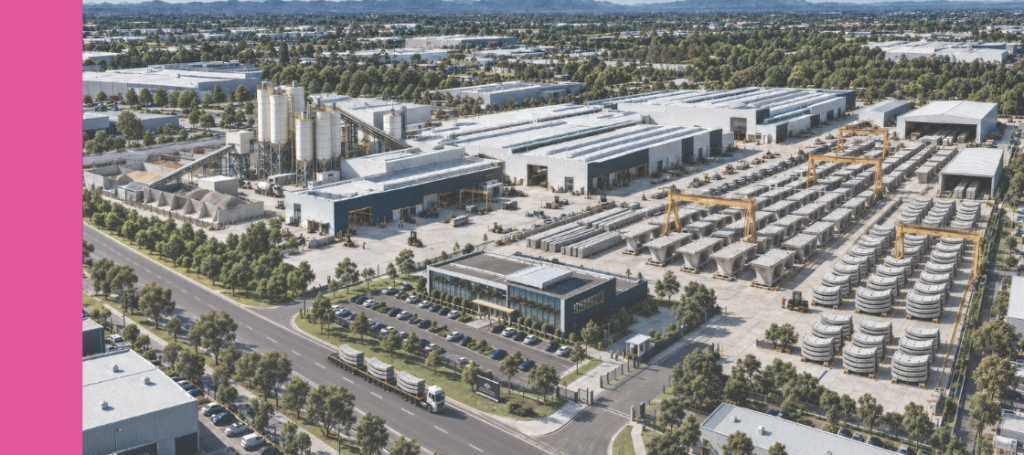
The proposed facility would bring together automation, robotics and precision manufacturing to produce the majority of construction elements required for the Newcastle to Sydney high-speed rail project.
Work is expected to include precast concrete elements and modular assemblies, which would be manufactured, assembled, tested and stored at the facility before being supplied to other construction packages.
The EOI is seeking organisations to participate in an Early Contractor Involvement process covering development of the manufacturing solution, design and delivery program.
Expressions of Interest close on 18 November.
A separate process is seeking suitable land for one or more advanced manufacturing facilities and associated temporary construction facilities.
The land search covers the corridor between Newcastle and Western Sydney International Airport, with proposed sites requiring at least 20 hectares and access to major roads and/or freight networks.
The land EOI closes on 5 November.
More information about the High Speed Rail Authority’s current procurement program is available through its industry update.
Hunter train manufacturing returns to market
The NSW Future Fleet Program is further advanced in defining how manufacturing will operate in the Hunter.
An EOI opened on 25 September for manufacturers to design and build the next generation of NSW suburban passenger trains, beginning with the replacement of the Tangara fleet.
The procurement is the first stage of a longer pipeline that is planned to continue with replacement of the Millennium and OSCAR fleets in the 2040s and the Waratah fleet in the 2050s.
The NSW Government says the new state-owned production facility is expected to anchor more than 30 years of train manufacturing in the Hunter. It will be operated by a private manufacturer.
The next generation of suburban trains is planned to incorporate new control and communication systems, remote diagnostics and fleet monitoring, improved accessibility and real-time passenger journey and connection information.
The first new locally manufactured suburban trains are expected to enter passenger service in the early 2030s.
Local content requirement creates supply-chain work
Manufacturers bidding for the Future Fleet work will be required to meet the NSW Government’s minimum 50 per cent local-content target for rolling-stock contracts.
Transport for NSW has already held supplier workshops and industry events in Sydney and Newcastle to prepare businesses for the procurement and connect potential participants in the supply chain.
Further regional NSW industry engagement sessions are planned during 2026, although locations and dates have not yet been finalised.
Transport has confirmed that supplier participation is not restricted to particular geographical areas, with businesses encouraged to engage directly with potential partners and through future industry events.
The Future Fleet EOI closes on 10 November.
Planning starts ahead of full business case
Transport for NSW has also begun some design, planning and procurement work earlier than it normally would for a program at this stage.
In its December 2025 industry Q&A, Transport said this included progressing train specifications, increasing design maturity, planning approval activities, procurement and industry engagement before the NSW Government considers the Full Business Case.
According to Transport NSW, releasing information and engaging industry earlier is intended to give businesses more time to plan and mobilise for the Future Fleet procurement.
Broadmeadow and Teralba sites under assessment
Two locations are being assessed for the new state-owned production facility: the Broadmeadow Locomotive Depot and a former coal mine at Teralba.
The Broadmeadow site is close to where the original Tangara fleet was manufactured between 1986 and 1998.
Selection of the Teralba site would require further engagement with Glencore and its partners over potential acquisition of the land.
A final decision is expected before the end of 2026.
The NSW Government expects construction of the facility to support up to 780 workers, with about 550 ongoing jobs expected in the facility and its supply chains.
Work to develop the train manufacturing workforce is already underway through the $447 million Tangara Life Extension Program, with two production lines established at the Cardiff rail facility.
The Cardiff work employs 100 qualified workers and 20 apprentices.
The Future Fleet investment follows decades of industrial change in the Hunter, including the closure of steelworks and changes in mining and transport manufacturing.
Premier Chris Minns said the government wanted the manufacturing program to provide businesses with enough certainty to make longer-term investments.
“But we’re not announcing a one-off order of trains. We’re building a long-term pipeline of work that gives industry the confidence to start investing in NSW, employing apprentices in NSW and grow local supply chains.”
The rail program sits alongside a separate $6.5 billion NSW Government investment over 10 years in new electric buses and electric depot infrastructure.