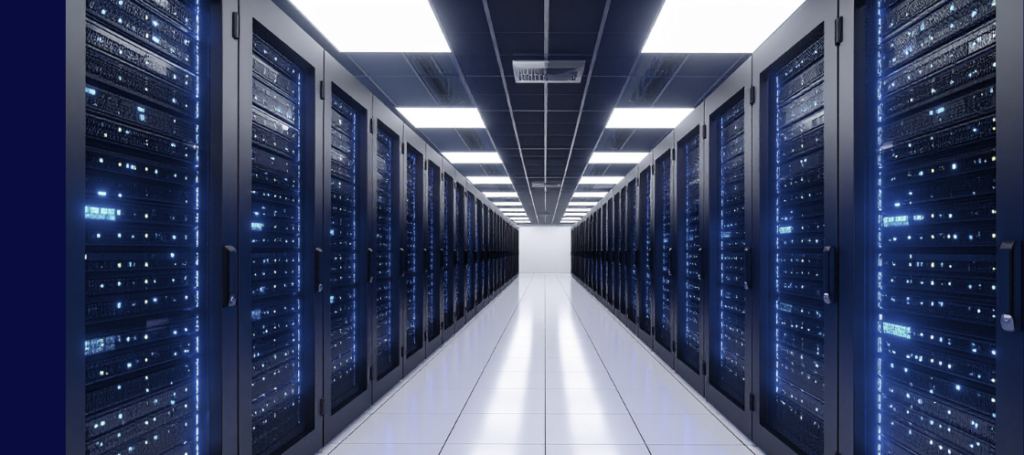
Australia’s rapidly expanding data centre sector is increasingly being viewed not simply as a source of electricity demand, but as a potential catalyst for the next wave of renewable energy investment.
The emergence of artificial intelligence is expected to drive substantial growth in hyperscale data centres, prompting governments, market bodies and industry to examine how that additional demand should be supplied. Rather than relying on existing generation capacity, the policy direction now emerging would require future developments to help finance new renewable generation, storage and associated network infrastructure.
The approach reflects a broader shift in thinking across the electricity market. Instead of asking how the grid will accommodate data centres, policymakers are considering how data centres can contribute to expanding the grid.
National framework links approvals with new renewable capacity
The Australian Government outlined that direction through its National Data Centre Expectations, which state that operators should underwrite new renewable electricity supply, fund the grid connections required for their projects and support the energy transition through flexible electricity demand.
In a speech announcing Australia’s proposed AI framework, Prime Minister Anthony Albanese said future large-scale data centres would face a legal obligation to contribute new generation capacity rather than rely on existing supply.
“We will create a legal obligation for the next generation of large-scale data centres to underwrite new power supply.”
He also said operators would be required “to put at least as much energy into our grid as they take out of it.”
Together, those measures would seek to ensure new AI infrastructure expands Australia’s renewable generation rather than competing with households and existing industries for electricity already available on the National Electricity Market.
Energy ministers face an early test
The proposed approach is expected to be tested at this week’s meeting of the Energy and Climate Change Ministerial Council (ECMC), where federal, state and territory ministers will consider measures relating to data centre energy requirements.
The Climate Council is urging ministers to convert the Government’s expectations into enforceable requirements. It notes that Queensland was the only jurisdiction at the council’s May meeting that did not support requiring new data centres to match their electricity demand with additional renewable generation and storage.
According to the organisation, decisions made through the ECMC will influence whether Australia’s growing AI sector accelerates renewable investment or places greater pressure on the existing electricity system.
Cost pressures remain central to the debate
The Climate Council argues that the key issue is not simply the volume of electricity data centres consume, but how that demand is supplied.
Its Clouded Future report concludes that, if additional demand is not matched with new renewable generation and storage, wholesale electricity prices could increase by up to 26 per cent in NSW, 23 per cent in Victoria and 14 per cent in Queensland by 2035. The report attributes those increases largely to greater reliance on gas-fired generation to meet additional demand.
The organisation also commissioned YouGov polling that found 82 per cent of Australians believe governments should require new data centres to fund the renewable generation and storage needed to match their electricity consumption.
Climate Council Chief Executive Amanda McKenzie said:
“Australians have sent a crystal-clear message: operators cashing in on the AI boom must bring their own clean energy to the table. With energy demand from Australian data centres set to triple by 2030, we can’t afford to let this industry drain our grid, push up electricity bills and create more climate pollution.”
Additional generation, not offsets
While the Government has outlined broad expectations, environmental groups are calling for stronger regulation.
Greenpeace Australia Pacific is advocating a moratorium on new AI data centres until binding rules are introduced, including requirements that facilities be supplied by additional renewable generation rather than relying on existing electricity supply or offsets.
Although the organisations differ on regulatory approaches, both argue that renewable capacity should be built alongside growing data centre demand rather than after it.
Commercial models are already evolving
The Department of Climate Change, Energy, the Environment and Water notes that the electricity density of modern data centres means onsite solar alone is often insufficient to meet demand. Instead, operators are increasingly expected to combine onsite generation where practical with offsite renewable power purchase agreements, battery storage and energy efficiency measures.
For energy developers, network businesses and major industrial electricity users, the debate extends well beyond AI. The framework now emerging would position hyperscale data centres as long-term purchasers and financiers of renewable generation, storage and transmission infrastructure, making them an increasingly influential source of investment as Australia’s electricity system continues to expand.