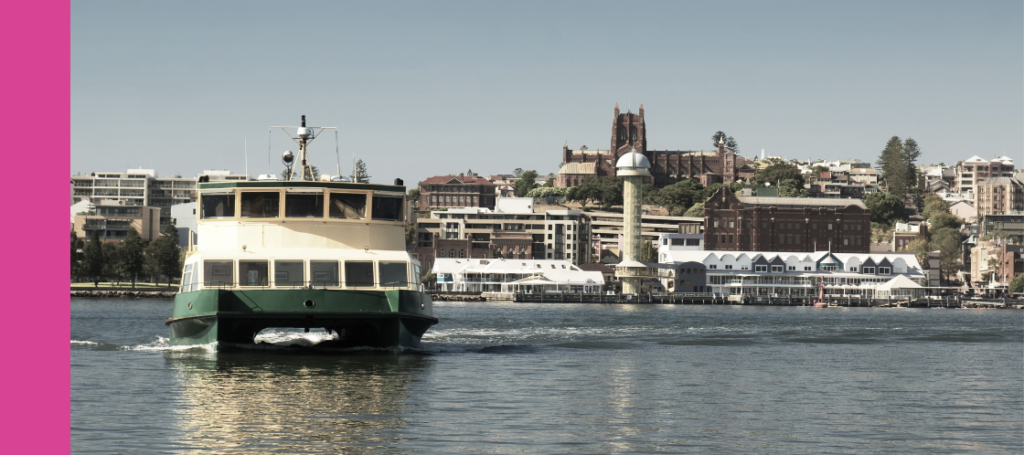
Newcastle councillors have renewed calls for electric ferries for the Stockton route after the NSW Government confirmed Sydney Harbour will host the state’s first battery electric ferry trial.
At City of Newcastle’s first ordinary meeting following the election of Lord Mayor Gavin Morris, councillors unanimously backed writing to NSW Transport Minister John Graham and Newcastle MP Tim Crakanthorp to reconsider the government’s recently announced $5 million investment in the existing Stockton fleet.
Instead of relying on mechanical repairs to extend the life of the MV Shortland and MV Hunter, councillors are seeking a commitment to a new electric fleet for Newcastle by 2030, mirroring plans underway in Sydney.
The timing of the push comes just days after the NSW Government announced contracts had been signed to build an Australian-made electric ferry for Sydney Harbour. The 24-metre vessel, to be built by Richardson Devine Marine, is scheduled to begin a 12-month trial from early 2028, with the government describing it as an important part of planning a transition away from diesel ferries over coming years.
Transport Minister John Graham said the vessel would help inform future decisions about ferry electrification.
“The first trial of an electric ferry on Sydney Harbour is an important moment for our iconic ferry fleet which will transition from diesel propulsion over coming years, informed by this first vessel,” he said.
A short-term fix or a delayed replacement?
For Newcastle commuters, the immediate focus remains reliability.
Earlier this month, the NSW Government committed $2.5 million to each of the MV Shortland and MV Hunter for extensive upgrades intended to extend the operating life of the vessels by up to a decade.
The ferries, built in 1986 and now approaching 40 years in service, have experienced repeated disruptions linked to mechanical failures and maintenance issues.
According to Newcastle MP Tim Crakanthorp, the works are intended to provide certainty for ferry users while replacement options are investigated.
“This life extension program gives the NSW Government and Transport time to investigate and procure new vessels.”
“I wrote to the Minister in November 2025 calling for Newcastle to receive new low-emission or electric ferries. I will continue to fight for them.”
Under the program, the MV Shortland will undergo upgrades in August, while the MV Hunter is scheduled for works in 2027. Both ferries will be taken out of service for around three months during improvements that include mechanical upgrades, technical work aimed at reducing service interruptions, and accessibility improvements.
The government has also stated it will continue investigating replacement vessels, including lower emissions technology such as electric and hybrid options.
Questions over parity with Sydney
For some Newcastle councillors, the announcement of Sydney’s electric ferry trial has intensified concerns about whether Newcastle is receiving the same level of attention.
Deputy Lord Mayor Charlotte McCabe said Newcastle had yet to receive a clear commitment on fleet replacement despite repeated mechanical failures and community concern.
“The Minns government has committed to replacing Sydney Harbour ferries the same age as Newcastle’s with electric vessels by 2030,” she said.
“Why does Newcastle receive the silent treatment for this vital public transport service?”
McCabe argued refurbishing the diesel ferries risks locking Newcastle into another decade of ageing technology at a time when the state has committed to lower-emissions transport.
Her criticism follows a petition led by Tim Crakanthorp calling for urgent repairs, replacement planning and a review of contractual arrangements for the service. The petition described repeated disruptions that affected access to work, education, health appointments and transport connections, particularly for people with disability.
Ferry future tied to a changing waterfront
The debate comes as Queens Wharf enters another stage of renewal.
City of Newcastle is progressing demolition and enabling works for Queens Wharf West, with the ferry office currently housed in the building set to move permanently to a new staff facility at Griffith Park in Stockton.
Council says the relocation is intended to support reliable ferry operations while creating space for future changes at Queens Wharf, which remains a key transport link between Stockton and Newcastle.
For now, the state government’s position remains focused on extending the life of the current fleet while longer-term options are explored.
For Newcastle councillors pushing for electrification, Sydney’s newly announced trial has sharpened the question of whether Stockton commuters will ultimately receive the same transition away from diesel ferries — or continue relying on vessels nearing four decades of service.