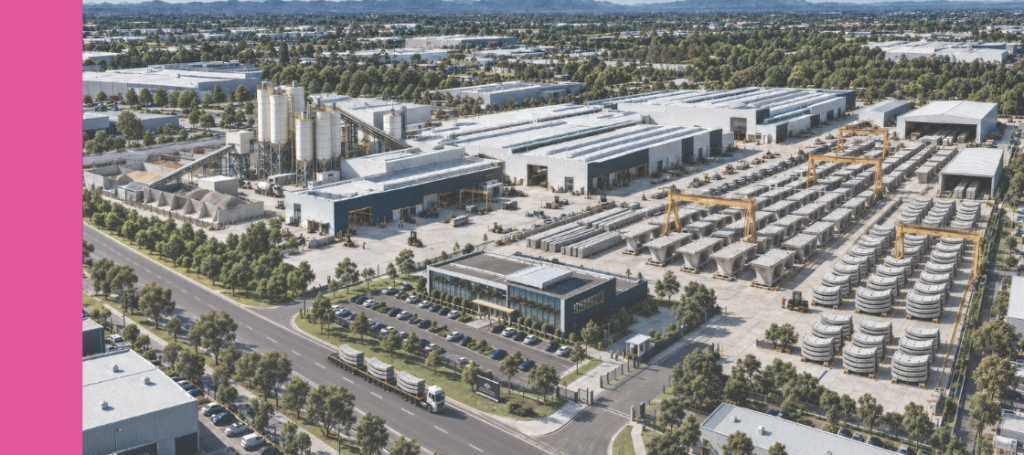
As industries across the Hunter continue to evolve, one of the greatest challenges is not generating new ideas but turning them into practical outcomes. The University of Newcastle’s Next Generation Resources Park has been developed around that challenge, combining research, industrial testing, manufacturing capability and workforce training within a single precinct designed to work alongside industry.
Regional Development Australia Hunter has joined the Park’s Industry Advisory Board through the Newcastle Institute for Energy and Resources (NIER), supporting a project that expands the University’s existing industrial research precinct while strengthening connections between businesses, researchers and education providers.
Rather than creating individual research facilities operating independently, the precinct has been designed as an integrated environment where technology development, skills training and commercial activity can occur together.
Giving businesses access to specialised capability
For many small and medium sized businesses, investing in specialised manufacturing equipment or industrial testing infrastructure can present a barrier to developing new products.
The Next Generation Resources Park has been designed to make those capabilities available through shared facilities including the Modern Manufacturing Workshop, Advanced Prototyping Facility, Australian National Fabrication Facility and the Future Industries Facility. Together they provide access to manufacturing equipment, engineering expertise, technical support and collaborative workspaces that businesses can use while developing new technologies.
The prospectus also identifies commercialisation support as part of the model, with the University’s Integrated Innovation Network helping businesses develop commercial capability alongside technical development.
Closing the gap between research and commercial use
The University’s prospectus identifies one of the biggest obstacles facing emerging technologies as the point between laboratory research and commercial deployment, when technical and financial risks increase and access to suitable testing facilities becomes more difficult.
The Future Industries Facility has been designed to help bridge that gap by providing industrial scale workshops where businesses, researchers and end users can undertake pre commercial trials and pilot testing before technologies move into wider deployment.
Supported by a $20.7 million Australian Government investment through the Regional Precincts and Partnership Program and a $2 million University contribution, the facility will accommodate up to 16 industry research partnerships at the same time.
According to the prospectus, reducing the cost and complexity of testing new technologies at this stage is intended to help promising ideas progress towards commercial readiness.
Building skills alongside new industries
Alongside technology development, the precinct places workforce capability at the centre of its design.
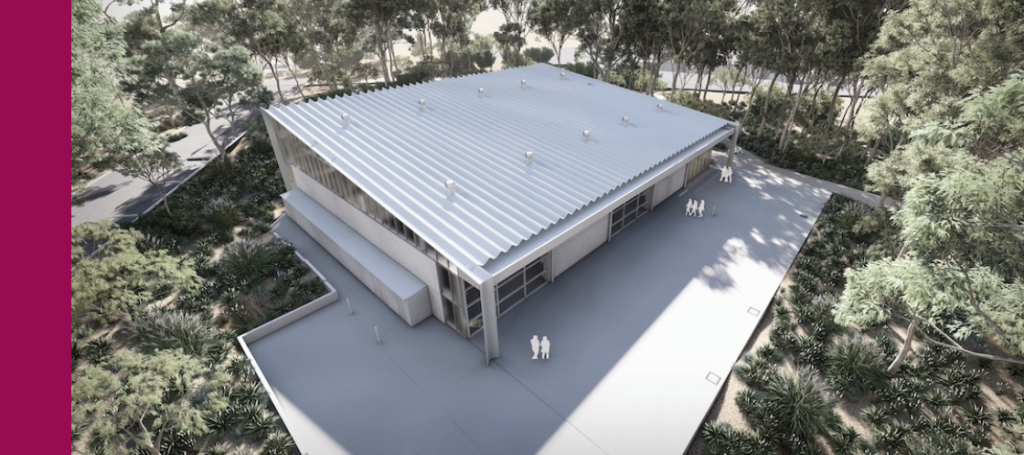
Construction is underway on the $20 million New Energy Skills Hub, where university students, TAFE participants, other training providers and industry will have access to specialist equipment for education, testing and demonstration.
The facility will include five functional areas covering clean energy technologies, electrochemical systems, sustainable fuels, smart grid and power engineering, and materials science. It will support short courses, micro credentials, industry placements and learning pathways spanning vocational education through to postgraduate qualifications.
Senior Deputy Vice-Chancellor (Academic) Professor Belinda Tynan said, “The University of Newcastle is, first and foremost, a university for our regions. As the Hunter prepares for carbon neutral future, the New Energy Skills Hub will ensure our students have access to the practical, industry ready training they need to step into the jobs of tomorrow.”
The Hub is funded through a $16 million Australian Government contribution under the Priority Community Infrastructure Program, with the University investing a further $4 million.
Connecting existing regional strengths
Rather than operating as a standalone project, the Next Generation Resources Park has been designed to complement existing organisations and initiatives across the region.
The prospectus identifies links with the Port of Newcastle Clean Energy Precinct, the AGL Hunter Energy Hub, the Trailblazer for Recycling and Clean Energy program, the NSW Energy and Resources Knowledge Hub and other regional partners as part of a broader network supporting technology development and workforce capability.
NIER’s Professor Alan Broadfoot said, “The Hub will be used by STEM students from both tertiary and VET sectors, secondary schools as well as industry.”
As businesses continue investing in new technologies and industrial capability, access to shared infrastructure, applied research expertise and practical training facilities has the potential to reduce development costs, strengthen collaboration and expand opportunities for companies looking to develop products and skills within the region.