The Australian Government has announced the outcomes of Tender 4 under the Capacity Investment Scheme (CIS), confirming 20 new renewable generation and storage projects to be built across the National Electricity Market (NEM). Together, these projects will provide 6.6 gigawatts (GW) of generation capacity by 2030—enough to power more than three million homes.
The CIS was designed to encourage private investment in clean energy while maintaining grid reliability as coal generation retires. It provides long-term revenue support for renewable projects, giving investors greater certainty and helping stabilise prices for consumers. The fourth tender focused on large-scale renewable generation, with a target of 6 GW across the NEM. It was highly competitive, attracting 84 bids totalling 25.6 GW—more than four times the available capacity.
NSW takes the largest share
New South Wales secured six of the successful projects, delivering 2.6 GW of new renewable generation and 3,913 megawatt-hours (MWh) of storage. The projects include a mix of solar, wind and hybrid developments such as Potentia Energy’s 500 MW Tallawang Solar Hybrid near Gulgong and EDPR’s 450 MW Merino Solar Farm.
Other NSW projects include Spark Renewables’ Dinawan Wind Farm (Stage 1), Tilt Renewables’ Liverpool Range Wind Farm, Metis Energy’s Bendemeer Energy Hub, and TotalEnergies’ Middlebrook Solar Farm. These projects represent the largest state allocation in the tender and will play a key role in replacing retiring coal capacity in the NEM.
Across all participating states, the successful projects committed around $17 billion in local investment, including about $1 billion in Australian steel. Collectively, they are expected to create more than 12,000 construction jobs and 1,000 ongoing maintenance roles over their 20-year lifespans.
Community and First Nations benefits
One of the key features of CIS Tender 4 was the emphasis on social licence and local partnerships. The selected projects have pledged a combined $291 million in community benefits and $348 million in First Nations initiatives. These include revenue-sharing arrangements, subcontracting opportunities, training and workforce development, and funding for local amenities such as libraries, pools, and parks.
“The Capacity Investment Scheme continues to be popular and competitive, delivering cheaper, cleaner and more reliable energy for all Australians for years to come,” said Minister for Climate Change and Energy Chris Bowen.
He added: “We are rebuilding Australia’s energy grid to make it modern, reliable and fair and attracting global interest in our wind and solar. The scheme is not only delivering clean power, but also creating thousands of high-quality jobs, often in remote and rural areas, and opportunities to train the next generation of engineers, electricians and tradespeople who will build our energy future.”
National outcomes
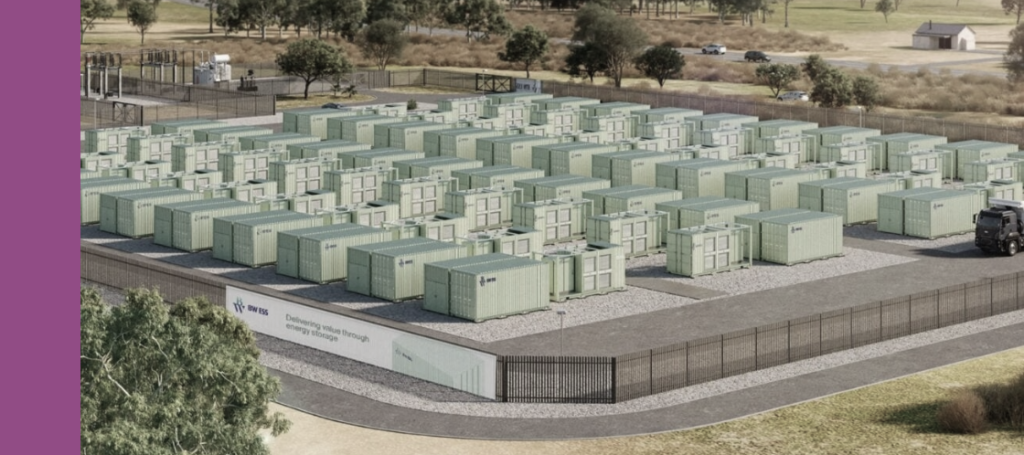
Of the 20 projects selected, 12 include battery storage, adding 11.4 GWh of capacity—enough to meet the peak electricity demand of around 2.6 million households for four hours. Wind developments account for nearly half of the total generation awarded, including Tasmania’s first CIS project, the 224 MW Bell Bay Wind Farm.
Queensland will deliver 2 GW of generation and 4,217 MWh of storage, while Victoria will add 1.2 GW and 2,114 MWh. South Australia will contribute 595 MW of generation and 1,200 MWh of storage.
The Australian Energy Market Operator (AEMO) and Australian Sustainable Finance (ASL) supported the competitive tender process, assessing project merit, social licence and value for money. The Minister for Climate Change and Energy made the final selections following recommendations from AEMO and ASL.
Looking ahead
CIS Tender 4 builds on earlier rounds that have already committed 6 GW of clean capacity nationally. The next generation round—Tender 7—is now open for registrations, seeking an additional 5 GW of NEM generation capacity from 14 October 2025, followed by a dispatchable capacity round in late November.