The Committee for the Hunter has released a pre-event Insights Paper ahead of Hunter Agenda 2026, positioning it as a starting point for structured debate about the region’s economic transition.
Released on 11 February 2026, the paper draws together economic data, industry analysis and community indicators to support discussion at the Hunter Agenda forum on 13 March at NEX Newcastle.
In outlining the stakes, the paper states: “Sustained prosperity depends on the choices collectively made now – on investment, governance, policy, coordination and timing.”
It describes Hunter Agenda 2026 as the forum to bring those perspectives together and test ideas about the region’s next chapter.
The Committee acknowledged its Insights Partner, KPMG, for supporting development of the report.
An economy in transition, not in decline
The paper frames the Hunter as an economy already undergoing change. For generations, coal mining, electricity generation and heavy industry have underpinned jobs, exports and energy supply. That legacy, it argues, has built deep industrial capability and a skilled workforce.
Major coal-fired power stations are closing or scheduled to close through the early 2030s, including Liddell, with Eraring set to close in 2029 and Bayswater between 2030 and 2033. Coal export volumes through the Port of Newcastle are expected to decline over time as resources deplete.
Coal and power currently account for around 55,000 direct and indirect jobs and approximately $40 billion in regional mining exports. NSW Government modelling cited in the paper indicates sustained job impacts without diversification, given the sector’s concentration and supply chain footprint.
However, the report makes clear that the transition is gradual, providing what it describes as a window to invest in both existing and emerging industries while coal remains part of the economy.
Measuring success beyond growth alone
A central feature of the Insights Paper is a proposed scorecard and framework designed to guide discussion about what success looks like for the Hunter.
Rather than focusing on a single target, the paper outlines multiple outcomes to be advanced together: replacing around 55,000 jobs released over time from coal industries; matching the scale of economic activity generated by coal; reaching net zero emissions; maintaining the region’s role as an energy producer across generation, transmission and storage; retaining heavy industry through decarbonisation; and lifting living standards.
As the paper states, “Success isn’t about hitting just one of these goals. It’s achieved when all of them move forward together.”
The report also argues that even without major intervention, the Hunter is expected to continue growing due to its size and diversity. The question posed is whether growth follows a business-as-usual path or whether coordinated action lifts performance beyond that baseline.
Energy assets reshaped, not abandoned
The Hunter’s energy profile is already changing. The Hunter and Central Coast Renewable Energy Zone attracted proposals representing almost 40 gigawatts and more than $100 billion in private investment from renewable generation and storage developers.
Forecast renewable generation of approximately 21,100 to 26,500 gigawatt hours per year would produce two to three times more clean energy than the region consumes locally, positioning it as a major exporter of renewable power.
Around 80 per cent of project cargo supporting NSW Renewable Energy Zones is imported through the Port of Newcastle, which handles about $48 billion in trade annually.
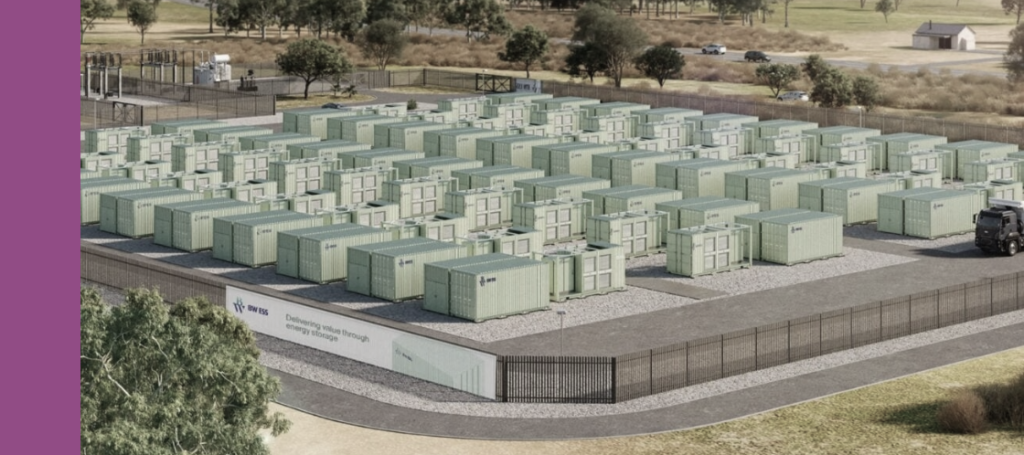
Major projects identified in the paper include the Hunter Transmission Project, the Waratah Super Battery, the Port of Newcastle Clean Energy Precinct, the Newcastle Logistics Precinct, the Hunter Valley Hydrogen Hub, large-scale battery energy storage systems at Liddell and Tomago, pumped hydro at Muswellbrook and the Hunter Offshore Wind Zone.
Traditional assets, including freight corridors, industrial land and skilled workers released over time from coal industries, are described as providing a head start for new investment.
Beyond energy: precincts, skills and high speed rail
Hunter Agenda 2026 will extend the discussion beyond energy to precinct development, transport and workforce capability.
Program highlights include sessions on high speed rail, defence and aviation growth linked to Newcastle Airport, and integrated development of next generation industry precincts. The agenda also includes a national perspective on education, skills and workforce adaptability in an innovation-led economy.
Keynote speakers listed for the event include Prime Minister Anthony Albanese, former Prime Minister Malcolm Turnbull, Jennifer Westacott, David Shankey, Tim Parker, Richard Yetsenga, David Moretto and Danish wind pioneer Henrik Stiesdal.
A forum, not a finished plan
The Committee positions the paper as an invitation rather than a blueprint. It states that the document is not a completed plan but a base for shared dialogue across government, industry, education, unions and the community.
“The choice is not between growth or decline – it is between the current path and the Hunter reaching its full potential,” the paper concludes.
To reserve your place at Hunter Agenda 2026 on Friday 13 March 2026 at NEX Newcastle, go here.