For generations, Newcastle’s economy has been shaped by the resources extracted from the ground and moved through its supply chains. As industries look more closely at energy transition and the circular economy, attention is increasingly turning to another resource stream that already exists in homes and businesses.
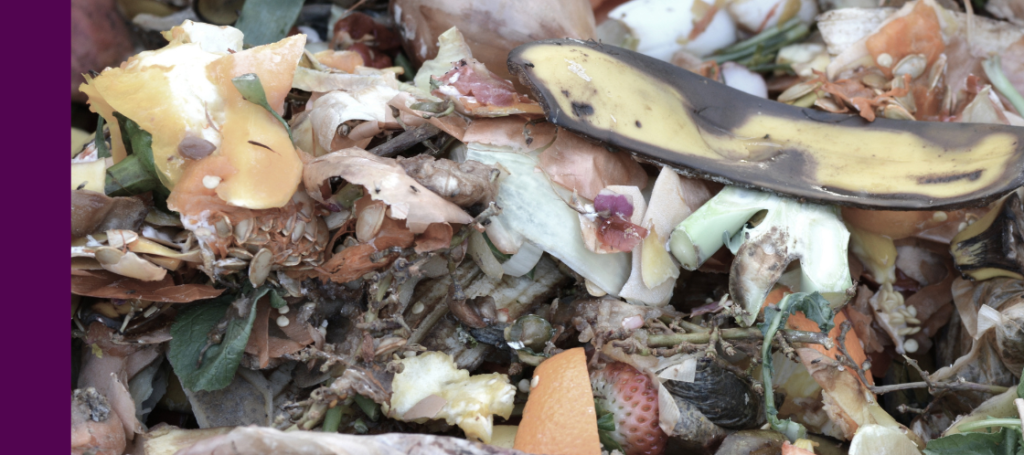
Food scraps and garden waste, once viewed simply as landfill, are becoming a feedstock for compost, allowing materials already in circulation to be recovered and used again.
That shift is the focus of a new research partnership between the University of Newcastle and the City of Newcastle, which will examine how households use the city’s future Food Organics and Garden Organics (FOGO) service before its planned rollout in mid-2027.
Research to improve resource recovery
The project brings together Associate Professor Alicia Kulczynski and Dr Christine Armstrong from the University of Newcastle’s Business School with the City of Newcastle’s Waste Education and Behaviour Change team.
Co-funded by the City of Newcastle and the Trailblazer for Recycling and Clean Energy (TRaCE) Program, the research responds to the NSW Government requirement for councils to introduce household FOGO services by 2030.
Rather than concentrating on collection alone, the project will investigate how residents understand the new system, identify barriers to correct sorting and assess how communication, point-of-use instructions and behavioural interventions can improve participation.
The work includes an audit of instructional materials, focus groups, behavioural experiments and surveys.
Associate Professor Kulczynski said the objective was to improve both participation and the quality of material collected.
“Our goal is to generate practical, evidence-based recommendations that maximise participation, minimise contamination and support the recovery of high-quality organic material.”
Creating value from material that was once discarded
City of Newcastle plans to introduce weekly FOGO collections for houses, duplexes, townhouses and unit buildings with up to 30 dwellings from mid-2027.
Existing green-lid bins will accept both food scraps and garden organics, with the collected material processed into nutrient-rich compost for agriculture and landscaping.
The quality of that compost depends on households placing the right material into FOGO bins. Reducing contamination means more of the collected organics can be recovered as a useful product rather than requiring disposal.
According to the City of Newcastle, more than 45 per cent of material currently placed in household general waste bins each week is food waste, representing a large volume of organic material that could instead be returned to productive use.
Councils work together on processing
The City of Newcastle and Port Stephens Council have also collaborated on the procurement of processing services, completing a joint tender for a third-party organics processing facility ahead of the rollout.
Together, the councils already collect around 28,000 tonnes of garden organics each year. Once FOGO is introduced, they expect another 10,000 tonnes of food waste to be diverted from landfill annually.
Managing Director of Waste Services David Witherdin said the FOGO rollout forms part of the city’s long-term approach to waste management.
“We’re implementing a range of waste management, recycling and recovery initiatives to cater for the needs of our city’s growing population.”
Supporting a broader circular economy
The City of Newcastle says FOGO will help create Australian-made compost products while supporting the circular economy by keeping organic material in productive use instead of sending it to landfill.
As more NSW councils prepare to introduce household FOGO services, the success of those programs will depend not only on collection infrastructure but also on how well communities separate organic material at the source.
The Newcastle research aims to provide practical evidence that helps recover more value from existing waste streams, demonstrating that the circular economy relies as much on changing how resources are used as it does on developing new industries.
If you live within the Newcastle Local Government Area and would like to contribute to this FOGO research project, go here.