Australia’s electricity system is being reshaped by consumers who are increasingly generating, storing and managing their own energy, according to Australian Energy Market Operator (AEMO) Chief Executive Daniel Westerman.
Speaking at Australian Energy Week 2026, Westerman said the most profound change in the National Electricity Market (NEM) has not been the expansion of large-scale generation, but the rapid growth of consumer energy resources.
More than four million rooftop solar systems are now installed across Australia, with one in three homes generating electricity. At the same time, home battery adoption is accelerating, with more than 400,000 installed during the past 12 months.
Westerman said the traditional distinction between electricity supply and demand is becoming less relevant as households and businesses increasingly contribute to how the market operates.
“Flexible energy use by big energy users is no longer just something the system reacts to; it’s a genuine system asset with increasing market benefit.”
Batteries change the shape of peak demand
AEMO pointed to record electricity demand in Victoria on 27 January as an example of how home batteries are already affecting grid performance.
Temperatures exceeded 43 degrees and electricity demand reached a new all-time peak. However, AEMO found households with batteries drew substantially less power from the grid during the evening peak than homes with rooftop solar alone.
At the time of peak demand, battery-equipped homes were drawing 1.4 kilowatts less from the grid, representing an 80 per cent reduction compared with solar-only households.
Across the first quarter of the year, households with batteries reduced their average evening peak grid consumption by nearly one kilowatt.
AEMO said these changes can lower household electricity bills while also reducing overall system demand during critical periods.
Storage capacity continues to expand
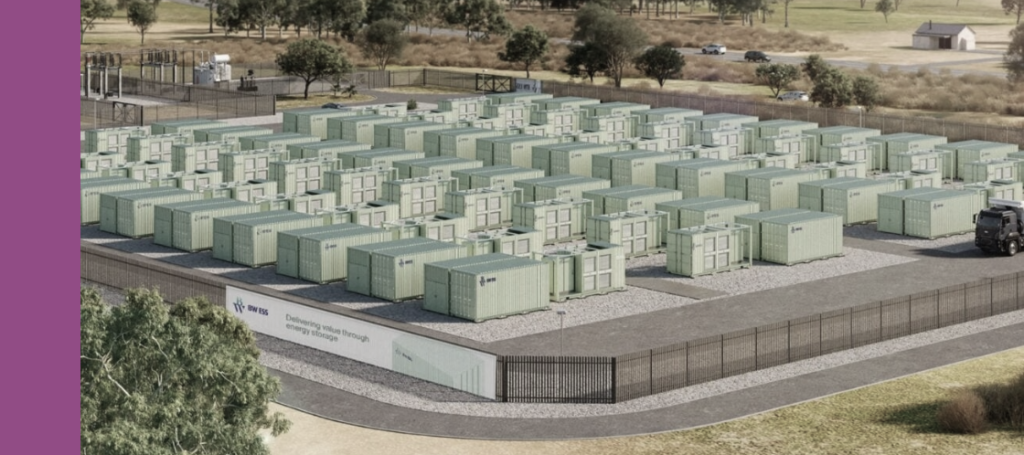
Grid-scale batteries are also playing a larger role in electricity markets.
The NEM now has around seven gigawatts of grid-scale battery capacity in a system with peak demand of approximately 33 gigawatts. During the first quarter of 2026, batteries more than tripled the amount of energy shifted from daytime periods into evening demand peaks.
On average, battery systems supplied more than 1,000 megawatts during evening peak periods and became the most frequent price-setting technology, determining market prices in around 32 per cent of trading intervals.
AEMO reported that Australia now has around 600,000 homes with batteries installed, while Western Australia has 1.5 gigawatts of grid-scale battery capacity against peak demand of about 4.5 gigawatts.
New focus on visibility and planning
As consumer energy resources become more influential, AEMO is examining how these technologies can be better incorporated into market operations and planning.
Westerman announced the commencement of work on a market visibility framework for price-responsive resources, aimed at improving forecasting and market decision-making.
“Now the Electricity Statement of Opportunities (the ESOO) and the Gas Statement of Opportunities (the GSOO) have considered the demand-side more and more over time, but the primary question for those publications is still: ‘will there be enough energy?’.
“So the new Demand Side Statement of Opportunities – the DSOO that we’re very excited about – will ask: ‘how can demand help solve the problem?’” Westerman said.
The initiative represents a shift in planning approaches, with a move to better understand how technologies such as rooftop solar, batteries, electric vehicles and flexible industrial loads could influence future system requirements.
Consumer participation linked to lower system costs
According to AEMO’s Draft 2026 Integrated System Plan, the total cost of the energy system could be reduced by $7.2 billion if consumer energy resources respond to market signals.
That modelling assumes roughly half of household and commercial batteries participate through virtual power plants, although AEMO noted that simpler battery operating arrangements can also deliver benefits.
The organisation expects consumer energy resources to account for more than one-third of NEM capacity by 2050.
At the same time, large industrial users are becoming more active participants through behind-the-meter generation, energy storage and sophisticated energy management systems.
Data centres emerge as a growing source of demand
AEMO also identified data centres as an increasingly important contributor to electricity demand.
Average data centre demand across the NEM reached nearly 600 megawatts during the first quarter of 2026, while 11 proposed facilities representing 5.4 gigawatts of ultimate load are progressing through transmission connection processes.
Westerman said demand forecasts already account for data centre growth, although current projections may increase as development activity continues.
Transition continues as coal retires
The speech also outlined the scale of change since the NEM began operating in 1998.
The number of large-scale generators has grown from around 60 facilities to more than 340, while nearly 40 per cent of the coal fleet has retired. The remaining coal-fired stations have an average age of 38 years.
AEMO said the energy system is continuing its transition towards renewable generation supported by storage, gas generation and network upgrades.
The final 2026 Integrated System Plan is scheduled for release on 25 June, with AEMO indicating that stronger-than-expected uptake of home batteries has been one of the developments incorporated since publication of the draft plan.