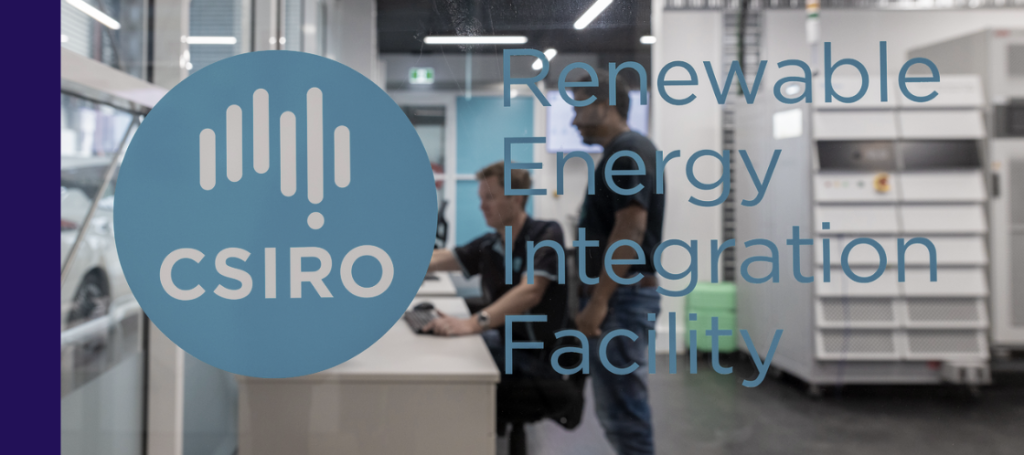
The CSIRO has launched a $3 million upgrade of its Renewable Energy Integration Facility (REIF) at the organisation’s Energy Centre in Newcastle, increasing the nation’s capacity to test and prepare new electricity technologies for deployment.
The facility is designed to help researchers, industry and system operators examine how emerging technologies can operate safely and reliably within the power system as electricity demand and generation patterns continue to change.
CSIRO Chief Executive Dr Doug Hilton said the site provides an independent environment to examine how technologies work together across the grid.
“The Renewable Energy Integration Facility provides industry, researchers and system operators with an independent laboratory to test how technologies such as wind, solar, batteries and electric vehicles can integrate safely and reliably into the grid,” Dr Hilton said.
New testing and simulation capabilities
The upgrade introduces expanded tools that allow simulation of microgrids and grid disturbances, as well as testing inverter performance under operating conditions that mirror those seen in homes and businesses.
Researchers can also run integrated trials combining solar generation, battery storage and electric vehicles, supported by improved data capture systems and advanced grid and battery emulation.
Vehicle-to-grid demonstrations form part of the program, exploring how electric vehicles can store excess solar energy and supply power back during peak periods.
The upgrade more than doubles the facility’s power testing capacity and adds programmable inverters and real-time hardware-in-the-loop simulation, enabling large-scale experiments that replicate real network behaviour.
Supporting system reliability and innovation
CSIRO Energy Systems Research Program Director Dr John Ward said the laboratory enables detailed analysis of how inverter-based technologies perform as their share of generation grows.
“The Renewable Energy Integration Facility allows us to simulate and stress-test real-world grid conditions, giving us deeper insight into how inverter-based technologies like solar and batteries perform as their share grows across the electricity system,” Dr Ward said.
He noted the facility allows collaboration with industry and market bodies to develop solutions for challenges such as long distribution networks, high rooftop solar uptake, variable weather and rising electricity demand.
The site also provides a testing pathway for new products, giving developers an independent setting to evaluate performance before entering the market.
Collaboration opportunities for industry
The Renewable Energy Integration Facility is open to external research organisations and companies seeking to run trials or commercialisation projects related to grid integration and energy technologies. Expressions of interest should be directed to EnergyEOI@csiro.au.
CSIRO is inviting expressions of interest from industry, while start-ups and small to medium enterprises can also access support through the agency’s Kick-Start Program.
Facility background
Established in 2009 and located at CSIRO’s Newcastle Energy Centre, the REIF is one of the largest renewable and grid integration testing sites in the southern hemisphere.
Research programs at the facility span electric vehicle charging, renewable and storage integration, inverter control and grid stability, with past projects including virtual power plant trials, standards development and solar aggregation studies.
The upgrade was funded through the Department of Education’s Trailblazer Universities Program.