The City of Newcastle has placed its draft Climate Action Plan 2030 (CAP 2030) on public exhibition, marking the next phase of its long-running climate program and setting out how targets adopted by Council will be delivered over the next five years.
Branded Mission Possible, the plan acts as a practical roadmap to achieve net zero emissions from City of Newcastle operations by 2030, while supporting the wider Newcastle Local Government Area to reach net zero by 2040. It builds on earlier climate action plans and aligns with the long-term Newcastle 2040 Community Strategic Plan and the Newcastle Environment Strategy.
The plan has been informed by community consultation, economic modelling, best-practice research and cost–benefit analysis, with actions designed to be achievable within existing service delivery responsibilities.
Targets for the city and council operations
The draft plan sets separate targets for the Newcastle Local Government Area and for City of Newcastle operations.
For the wider city, targets include net zero emissions by 2040 and a 100% reduction in city-wide greenhouse gas emissions from electricity by 2030. For council operations, the plan commits to net zero emissions by 2030 across electricity, fuels, gas, water and wastewater, and office paper, alongside reductions in Scope 3 emissions and net zero landfill gas emissions by 2040.
The plan also sets a longer-term ambition to move beyond net zero emissions and become climate positive after 2040.
These targets are framed against international climate science, including pathways consistent with limiting average temperature rise to 1.5°C.
Embedding climate action across council services
Rather than treating climate action as a standalone program, CAP 2030 integrates 77 actions across four themes drawn from Newcastle 2040: Liveable, Sustainable, Creative and Achieving Together.
This approach extends climate action into planning, transport, waste, community programs, culture and service delivery, reflecting a view that emissions reduction, equity, economic resilience and quality of life are interconnected.
The City of Newcastle describes this as a whole-of-organisation approach that moves beyond technology alone to include social and economic change.
Community programs at the centre of the plan
Several community-facing programs form a core part of CAP 2030’s delivery model.
The expanded Empowering Newcastle program is positioned as the council’s main platform to support households, businesses and community groups to reduce emissions. New elements include a free ‘go electric’ advice service for homes and businesses, guidance on solar, batteries, appliances and electric vehicles, and support to connect with local installers.
The Energy for All program will assist renters, apartment residents, low-income households and culturally and linguistically diverse communities through energy advice, bill checks, thermal comfort guidance and help accessing rebates.
For local businesses, the Empowering Newcastle business program will provide energy audits, carbon accounting support, advice on renewable energy and electric vehicle uptake, and circular economy initiatives through workshops and tailored assistance.
Infrastructure projects and precinct-scale opportunities
CAP 2030 also identifies major infrastructure projects intended to reduce operational emissions and support broader community outcomes.
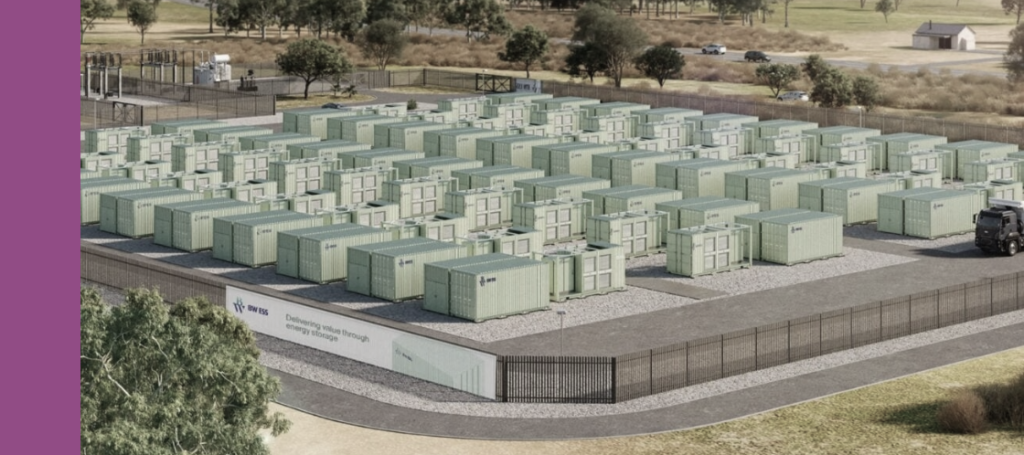
One of the largest is the proposed Astra Street Community Energy Precinct at Sandgate, where council will explore transforming a capped landfill into a solar farm, battery hub and heavy electric vehicle charging facility. The project is being investigated alongside options for renewable energy sharing, with further community consultation planned before any progression.
Additional actions include installing more solar and battery systems on council facilities, transitioning vehicles and equipment to electric or low-emission alternatives, and reducing emissions from waste and landfill operations.
Funding model and forecast returns
The draft plan estimates $42 million in additional capital investment over five years, on top of existing climate action programs. Council states it will seek at least half of this funding through grants and commercial partnerships, including federal programs.
The City of Newcastle says the investment is expected to deliver ongoing financial returns through lower energy costs and locally generated renewable electricity. As outlined in the plan, “The actions in the CAP 2030 are expected to generate $3.5–$4 million in savings and income each year by 2030, through cheaper energy, fuel savings, and locally generated renewable electricity.”
Council has also confirmed it has already submitted a $5 million grant application to the Australian Renewable Energy Agency to support battery projects across its facilities.
Why ‘Mission Possible’
Council says the name of the plan reflects an emphasis on achievable action rather than abstract ambition. As stated on the City of Newcastle Have Your Say platform, “We’ve called the CAP 2030 Mission Possible because it’s about focusing on what we can achieve, not just the scale of the challenge.”
The plan positions climate action as something delivered through defined projects, costed actions and community participation, rather than aspirational targets alone.
Public exhibition and next steps
The draft Climate Action Plan 2030 is on public exhibition from 4 February to 4 March 2026. Feedback can be provided through an online survey, quick poll and written submissions. To learn more about the CAP 2030 and ask questions in person, attend the free community workshop on Wednesday 18 February, more details here.
All submissions will be reviewed before the final plan is presented to Council for adoption later in 2026.