Two separate energy storage announcements this week have reinforced the Hunter’s growing contribution to New South Wales’ changing electricity system, linking new generation, long duration energy storage and the specialised logistics needed to deliver major infrastructure projects.
The NSW Government has approved the Stratford Pumped Hydro and Solar Project near Gloucester, while Port of Newcastle has announced it is the first port in New South Wales approved to safely store grid scale lithium ion batteries.
Although the projects perform different functions, both support the delivery of renewable energy infrastructure, with one providing long duration electricity storage and the other improving the movement and temporary storage of equipment required to build battery projects across the state.
Stratford approval adds long duration storage
The approved Stratford Pumped Hydro and Solar Project will repurpose the former Stratford Mining Complex, where mining operations finished in 2024, into a renewable energy facility combining pumped hydro energy storage with solar generation.
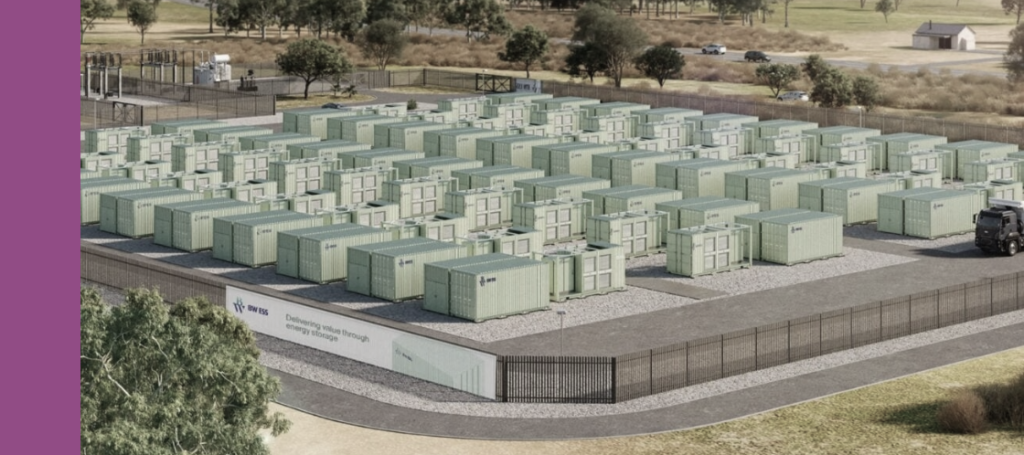
The development includes a 300 MW pumped hydro energy storage scheme capable of providing up to 3,600 MWh of storage, a 320 MW solar farm, an on site substation and associated transmission infrastructure. Construction is expected to take around four years.
According to the project, the pumped hydro facility will generate electricity during periods of peak demand or when renewable generation is unavailable, while the solar farm will primarily supply electricity to the pumped hydro system, with the ability to export surplus generation to the grid when available.
The project is expected to create up to 350 full time jobs during construction and 10 ongoing operational positions. Once operating, the pumped hydro facility will be capable of supplying 300 MW of electricity for up to 12 hours, equivalent to the electricity demand of between 140,000 and 180,000 households over the same period.
In approving the project, the Department of Planning, Housing and Infrastructure said it would play an essential role in supporting NSW’s transition from coal fired power generation by providing long duration storage and dispatchable electricity when renewable generation is insufficient.
Port expands renewable energy logistics
While Stratford will store electricity, Port of Newcastle’s latest approval strengthens another part of the supply chain by providing additional logistics capability for battery projects entering construction.
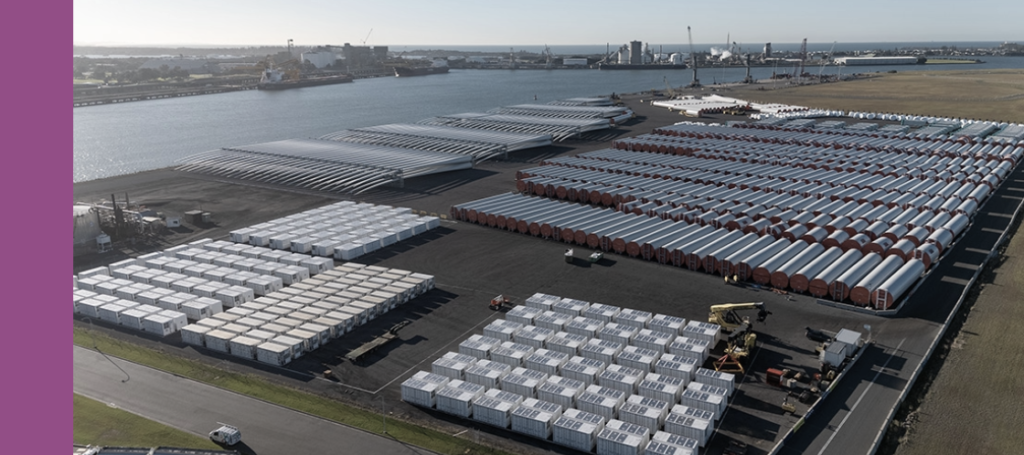
The approval, granted by the NSW Government in late 2025 following consultation with the Department of Planning, Housing and Infrastructure, allows the Port’s Mayfield Multipurpose Terminal to safely receive and temporarily store grid scale lithium ion batteries before they are transported to project sites.
The capability has already been used to receive battery units for AGL’s Tomago Battery, Origin Energy’s Eraring Battery and the Bellambi Heights Battery Energy Storage System.
Together, those projects represent around 1.7 GW of dispatchable capacity and 6.8 GWh of energy storage, enough stored electricity to supply more than one million homes for four hours during periods of peak demand.
Port of Newcastle Chief Executive Officer Craig Carmody said specialist handling capability had become increasingly important as more large scale battery projects moved into construction.
“These are complex cargoes that require specialist handling, purpose-built infrastructure and the right safety systems. We’ve invested in that capability because we see where the market is heading and what our customers will need.”
The Port is also investing in a $36 million berth extension at its Multipurpose Terminal while examining opportunities to increase capacity for project cargo and battery storage.
Supporting projects from arrival to operation
The two announcements demonstrate the range of infrastructure now supporting NSW’s energy transition across the Hunter, from logistics and equipment handling through to electricity generation and long duration storage.
AGL Chief Operations and Construction Officer Matthew Currie said Port of Newcastle’s storage capability was already providing practical benefits for construction of the Tomago Battery.
“As we prepare for the installation of more than 400 lithium-ion battery units to form the Tomago Battery, the ability to safely receive and temporarily store battery units and other components at the Port of Newcastle is providing important flexibility for our project team.”
As renewable energy developments continue to move from planning into construction across New South Wales, the ability to combine established industrial infrastructure with new energy generation, storage and logistics capabilities is an increasingly crucial part of delivering projects at scale.