The NSW Government announced that master plans and rezonings had been finalised for two major Hunter mining precincts today, establishing a planning framework for their transition to new industrial and employment uses.
The changes affect BHP’s Mt Arthur Coal Mine near Muswellbrook and Glencore’s former Macquarie Coal Complex at Teralba and West Wallsend.
Both sites have been identified as potential locations for renewable energy infrastructure, advanced manufacturing, warehousing and other industries that could make use of existing transport, electricity and water infrastructure.
The planning work involved the NSW Department of Planning, Housing and Infrastructure, local councils, mining companies and the Australian Government’s Net Zero Economy Authority.
The two pilot projects received $5 million in Australian Government funding, alongside in-kind support from the NSW Government.
The rezonings follow public consultation earlier this year and introduce planning controls intended to allow new industries to establish operations as mining land becomes available for redevelopment.
Mt Arthur prepares for industry beyond coal
At the Mt Arthur Coal Mine near Muswellbrook, where BHP plans to end mining operations in 2030, the finalised planning framework covers approximately 5,700 hectares.
Around 800 hectares across two priority development areas have been identified for early industrial use, with access to major highways and the mine’s existing rail loop.
According to the NSW Government, the precinct could accommodate up to 5,900 jobs through future industrial development.
The plans also provide for approximately 4,600 hectares of rehabilitated land for agricultural and environmental uses.
The rezoning creates a framework for new employment-generating activities while allowing for the rehabilitation and reuse of other parts of the mine site.
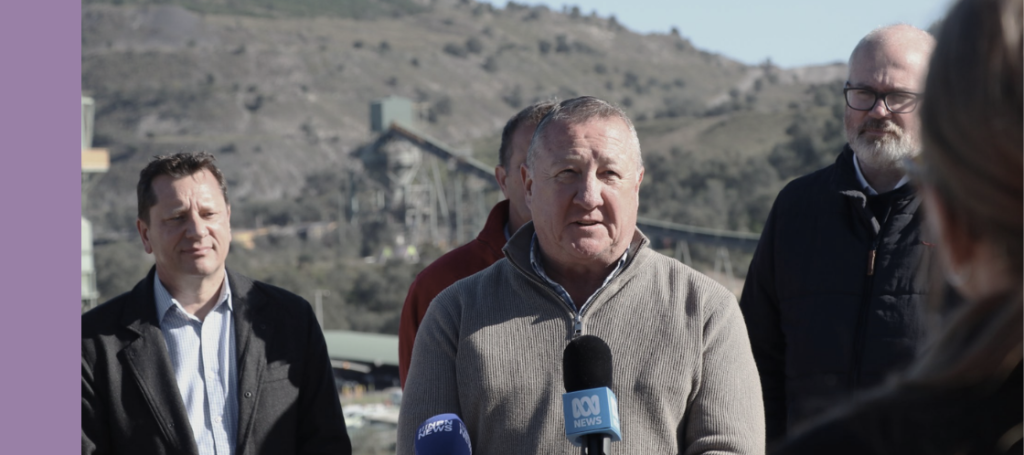
Muswellbrook Shire Council Mayor Jeffrey Drayton welcomed the decision, describing it as an opportunity to prepare the community for economic change as coal mining winds down.
“This is more than just a plan; it’s a vote of confidence in Muswellbrook and our future beyond coal,” he said.
He also acknowledged the work still required to attract businesses and employment to the precinct.
Macquarie Coal Complex linked to manufacturing plans
In Lake Macquarie, the finalised master plan and rezoning cover an employment precinct of approximately 1,142 hectares at the former Macquarie Coal Complex.
At least 500 hectares have been identified as developable land, with the NSW Government estimating the precinct could accommodate up to 1,130 jobs.
The plans also provide for approximately 36 hectares of new open space, 22 hectares of residential land and around 620 hectares of environmentally constrained land.
Located approximately 20 kilometres south-west of Newcastle, the former mining site has connections to the M1 motorway and Main Northern Railway.
The planning decision follows the NSW Government’s announcement on 20 October identifying land at Teralba as the preferred location for a new state-owned passenger train manufacturing facility.
The proposed facility forms part of the $12 billion Future Fleet Program, which is intended to re-establish passenger train manufacturing in the Hunter.
The Teralba site remains subject to further investigations, planning and land acquisition arrangements, with Broadmeadow retained as an alternative.
The wider Macquarie Coal Complex precinct has also been identified for other potential industrial uses, including renewable energy infrastructure, manufacturing and warehousing.
Lake Macquarie Mayor Adam Shultz said the planning changes offered opportunities beyond the proposed train manufacturing facility.
“This is about securing the region’s economic future, creating opportunities for future generations and ensuring former mining land remains productive long after mining has ceased,” he said.
Rehabilitation and development approvals still required
While the rezonings establish planning controls for new industrial activities, they do not provide automatic approval for individual developments or remove existing mine rehabilitation obligations.
According to the NSW Government, mining companies must rehabilitate land before it can be released for development, with sites required to be confirmed as safe, stable and non-polluting.
Future industrial projects will also need to undergo development assessment under the relevant planning requirements.
The draft proposals were publicly exhibited between 14 July and 11 August 2026, attracting 177 submissions across the two precincts.
The Department of Planning, Housing and Infrastructure has published the finalised master plans, rezoning reports and supporting documents for both sites.