The Hunter’s experience of industrial and energy transition will form part of an international exchange of knowledge aimed at helping regions manage changing industries, workforce requirements and emerging economic opportunities.
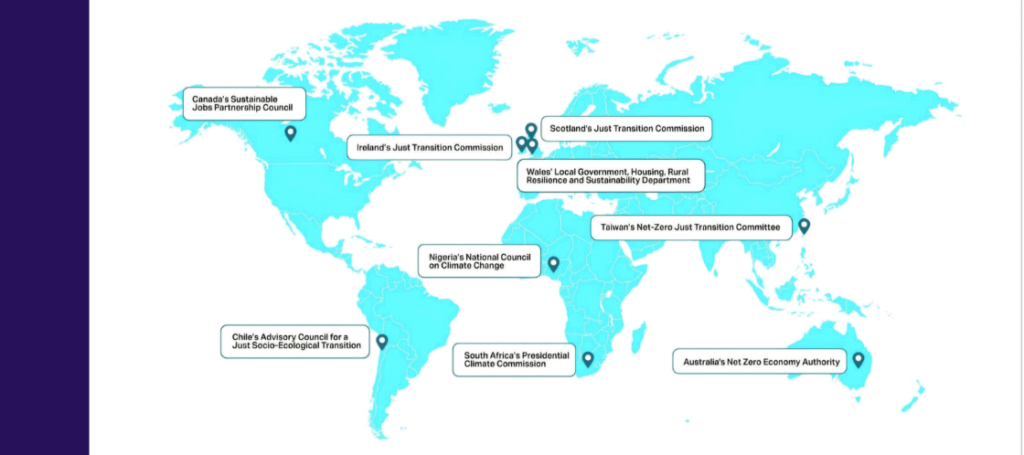
Australia’s Net Zero Economy Authority (NZEA) and Scotland’s Just Transition Commission have established the International Just Transition Network (IJTN), bringing together nine organisations involved in developing, implementing or scrutinising policies that support communities through the transition away from fossil fuels.
Announced on 1 October, and confirmed by Scotland’s JTC on 7 October, the network was formally launched during a United Nations Framework Convention on Climate Change (UNFCCC) workshop in Sydney.
Both organisations have identified the Hunter and Aberdeen as major fossil fuel-exporting regions seeking to diversify their economies, support existing workforces and use established energy-sector skills to develop new industries.
The comparison provides a practical example of the network’s purpose: allowing organisations involved in regional transition to learn from approaches already being developed or tested elsewhere.
Sharing lessons from industrial change
The IJTN has been established as a voluntary, member-led network for organisations that advise on, examine or implement policies supporting a fair transition to lower-emissions economies.
Rather than developing common policies for every region, participating organisations will exchange technical knowledge and practical experience, including the challenges encountered when putting transition plans into effect.
For the Hunter, this could provide NZEA with access to lessons from Aberdeen and other energy-producing regions concerning workforce development, economic diversification and the creation of new industries.
The Scottish JTC has an explicit responsibility under its renewed remit to foster cooperation with international counterparts and share lessons through bilateral relationships and the UNFCCC framework.
Its involvement in establishing the IJTN is intended to support that work while creating opportunities for participating organisations to draw on experience from different regional circumstances.
In his address announcing the network, NZEA Chief Executive Officer David Shankey said the value of international cooperation would depend on whether it improved the way regional transitions were managed.
“There are communities that have already experienced things Australian communities are only beginning to encounter. If we can take what has been learned in one community and put it to work in another, then this network will have done something genuinely useful.”
Shankey also identified the importance of learning from unsuccessful approaches, including policies that had encountered practical difficulties or failed to meet community expectations.
Scotland brings experience to the discussion
Scotland’s Just Transition Commission provides independent scrutiny and advice on the country’s transition to a lower-carbon economy.
Its work includes examining the implications of industrial change for workers and communities, and how transition policies can be implemented fairly across different regions.
The Commission’s renewed remit includes international cooperation, reflecting an interest in understanding how other jurisdictions are responding to similar economic and social challenges.
JTC Co-Chairs Satwat Rehman and Dave Reay said the new network was already contributing to their organisation’s understanding of transition issues.
“We hope this timely new initiative will model international collaboration on addressing mission-critical social and economic blockers to emissions reduction and climate resilience. The network is already strengthening our understanding of how to tackle key challenges in Scotland. It will provide practical support for other jurisdictions to put robust governance mechanisms in place to apply just transition principles in local contexts.”
The network is intended to support direct exchanges between participating organisations, rather than establish another international negotiating forum.
NZEA and the Scottish JTC will serve as co-convenors, with both organisations helping coordinate its initial development.
Nine organisations establish international network
Alongside Australia and Scotland, the IJTN’s founding membership includes Canada’s Sustainable Jobs Partnership Council, Chile’s Advisory Council for a Just Socio-Ecological Transition and Nigeria’s National Council on Climate Change.
Ireland’s Just Transition Commission, South Africa’s Presidential Climate Commission, Taiwan’s Net-Zero Just Transition Committee and the Welsh Government’s Local Government, Housing, Rural Resilience and Sustainability Department complete the initial membership.
The organisations have identified the Hunter and Aberdeen as one of several regional comparisons that could inform their work.
These include Central Queensland and Alberta in Canada, both major energy-producing regions seeking to manage emissions reduction while supporting workers and local economies.
Other examples include Collie in Western Australia and Antofagasta in Chile, as well as Victoria’s Latrobe-Gippsland region and Komati in South Africa.
The comparisons reflect common transition challenges, although the policies and approaches needed in each region will depend on local conditions.
Network prepares to expand
The IJTN held its inaugural meetings in March and July 2026, before its formal launch in Sydney. Its next meeting was scheduled for mid-October.
According to the Scottish JTC, an early priority will be engaging additional prospective members to broaden the range of regional experiences and perspectives represented in the network.
The organisations also plan to invite expressions of interest from prospective hosts for the IJTN Secretariat to support its continuing operation.
The network is intended to complement existing international work, including the International Labour Organization’s Guidelines for a Just Transition and processes operating through the UNFCCC.