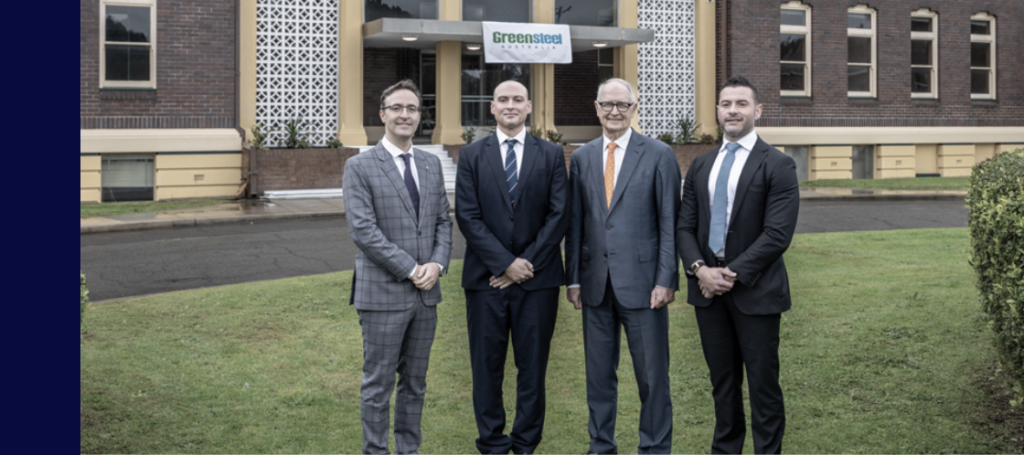
Steel production is set to return to the former BHP Newcastle Steelworks site, with Greensteel Australia announcing a $500 million investment to build Australia’s first new steel mill in more than 30 years.
The company has secured the 70,000 square metre site at 51 Industrial Drive, Mayfield North, where refurbishment and modernisation works are scheduled to begin before the end of 2026. The mill is expected to be operational by January 2028.
Greensteel Australia said the project will be Australia’s first steel mill to operate entirely on electricity, with no gas used anywhere in the manufacturing process. Reinforcing bar will be the first product manufactured, with wire rod and coil planned for later stages.
The announcement covers the first stage of the company’s plans for the Mayfield site, with details of Stage 2 expected in the coming weeks.
Electric production replaces gas
The facility will use electric induction furnace technology rather than conventional gas fired furnaces to manufacture steel.
According to Greensteel Australia, the process produces no direct carbon dioxide emissions from heating and removes the plant’s reliance on gas supplies. The mill is intended to connect with renewable electricity as part of its operating model.
Equipment for the facility, including the electric induction furnace supplied by Italian steel infrastructure company Danieli, is expected to arrive from October 2027.
Domestic supply for construction
The mill is expected to produce up to 600,000 tonnes of finished steel each year for the housing, transport and energy sectors.
Greensteel Australia says increasing domestic production will reduce reliance on imported steel and contribute to lower embodied carbon in Australian construction while supporting national and state housing targets.
Greensteel Australia Chairman Ross Garnaut AC said, “Every tonne of steel we forge at Mayfield is a tonne Australia doesn’t have to import. That means more reliable supply and better prices for builders, and because there is no gas anywhere in our process, it also means lower embodied carbon in the homes and infrastructure this country needs. That’s a win for builders and home buyers, and a win for the Hunter.”
The company expects the mill to directly employ more than 200 full time workers, including engineers, electricians, fitters, metallurgists and crane drivers, with further employment generated during construction and through regional suppliers.
Policy certainty cited by company
Greensteel Australia said recent state and federal policy settings provided the confidence needed to proceed with the investment.
Head of Government Relations Patrick Buchan said government initiatives including the Future Made in Australia agenda, housing targets and support for industry in the Hunter had created the certainty needed to manufacture steel domestically rather than offshore.
Chief Executive Officer Romany Ibrahim said, “Australia stopped building steel mills a generation ago. Thanks to the leadership of the NSW and Federal Governments, we’re building again. They’ve made it possible to bring manufacturing home to Newcastle, where Australian steelmaking began and where it never should have left.”
Local MP Tim Crakanthorp welcomed the announcement, describing it as an investment that would support manufacturing, employment and local supply chains while reducing the carbon footprint of steel used in housing, transport and energy infrastructure.
Industry sees wider manufacturing opportunities
Business Hunter described the investment as an endorsement of the region’s industrial future and said the project demonstrated that economic diversification and lower emissions manufacturing could develop alongside established industrial capability.
Chief Executive Officer Bob Hawes said the return of steelmaking to the former BHP precinct carried symbolic importance for businesses that continue to manufacture and work with steel products.
“This investment combines traditional industrial strengths with new technologies and lower-emissions production methods. It is a powerful example of how the Hunter can continue to grow, diversify and prosper while contributing to Australia’s net zero ambitions,” Hawes said.